
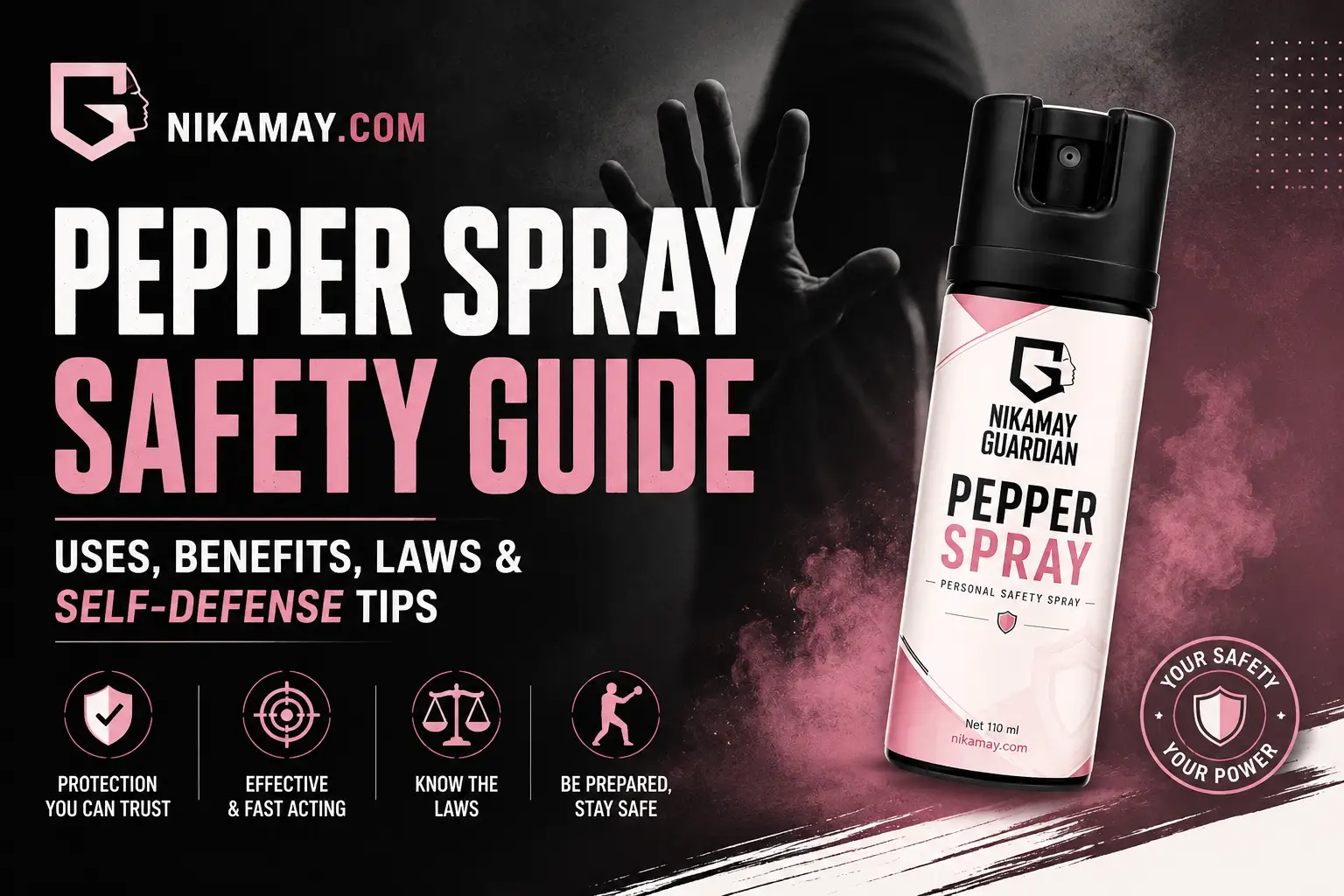
Pepper spray is a common tool used by everyday people and law enforcement to de-escalate a situation. Its primary ingredient, called Oleoresin Capsicum (OC), irritates the eyes and causes burning and pain sensations. Its inflammatory effects can cause the eyes to close, temporarily impairing someone’s vision. This temporary blindness allows officers to more easily restrain subjects and provides civilians an opportunity to escape when in danger. Pepper spray is a well-known and common self-defense tool because it’s compact, easy to use, and effective at deterring threats without causing permanent harm.
One study in Injury Prevention, a peer-reviewed journal, estimated that more than 20% of women carry pepper spray as a self-defense tool on a regular basis. While pepper spray is readily available, effective, and popular to carry, there are many considerations someone should take before purchasing and using it.
Ready to take your personal safety seriously?
Remember no saving is worth more than your protection. Explore NIKAMAY’s complete range of self-defense solutions, safety resources, and expert guidance designed to help you stay prepared, protected, and confident wherever life takes you.
What is Pepper Spray and How Does it Work?
Pepper spray is a personal safety device that causes inflammation of the eyes, skin, and respiratory system when deployed. The intended purpose of pepper spray is to deter an attacker and to give people the opportunity to escape. The lasting effects of pepper spray can be anywhere between 15 to 45 minutes, but can vary by person.
One of the greatest advantages of using pepper spray is the fact that the agent will give the person an advantage by creating a lot of space between them and the attacker. This gives the potential victim the opportunity to make themselves safe, alert the authorities, run for cover or do anything else that might save them from an aggressive assailant.
If the person is at a disadvantage to the attacker, then using pepper spray becomes a method of defense without having to use violence as means of protection. The objective is to simply create space from the aggressor and gain the upper hand.
What is the Ingredient in Pepper Spray?
Oleoresin Capsicum (OC) is one of the ingredients found in most pepper sprays. Oleoresin Capsicum refers to the oil contained within a hot pepper. Although Oleoresin Capsicum (OC) is the active ingredient within most pepper sprays, it should be understood that the OC percentage will not determine the strength of the spray.
OC is made up of different capsaicinoids, which are a group of compounds responsible for the spicy, pungent taste of a hot chili pepper. There are five major capsaicinoids responsible for providing the pungency or hotness of a pepper. Capsaicin is the strongest or most important of the five. Therefore, it is the percentage of the total capsaicinoids, not the OC percentage, that is most important when determining which pepper spray brand you should buy.
Civilian and law enforcement pepper sprays range from 0.18% to 1.33% Major Capsaicinoids. This is often an overlooked detail when choosing a pepper spray brand.
Looking for a reliable pepper spray you can trust?
Whether you need a compact keychain spray, long-range pepper gel, or an everyday carry option, NIKAMAY offers high-quality self-defense products designed for effectiveness, convenience, and peace of mind.
What Different Types of Pepper Spray Are Available?
Pepper spray can be delivered as a stream, fog, mist, or gel, and the primary difference between them is the spray pattern. For example, pepper gel is a sticky substance that clings to the attacker’s face and can reach a distance of up to 14 ft (maximum), while a bear spray pattern is more of a thick cloud or fog with a longer range (up to 40 ft; all sprays have different spray force).
Most pepper sprays have a firing range of up to 8-14 feet. NIKAMAY pepper spray and pepper gel boast a range of up to 14 feet, which gives users a greater opportunity to neutralize a threat from a safer distance.
Note: the optimal distance to deploy pepper spray is between 8 and 12 feet to ensure the spray makes contact with the attacker.
Pepper spray is also the key ingredient in bear spray, which has a higher concentration of Major Capsaicinoids – 2% to pepper sprays 0.18-1.33%. Bear spray also has a significantly longer range. Bear and mountain lion spray can reach a distance of up to 40 feet, while some brands average about 33 feet. Pepper spray and pepper gel are exclusively for use on humans and can be ineffective against large animals, like a bear. Conversely, bear spray is illegal to use on humans.
Another consideration before buying pepper spray is the canister size. Pepper spray is available in a number of carry options, such as on a keyring, pocket-sized similar to a lipstick tube, on a bike strap, with a belt clip, and home defense models. There are also other features someone might prefer, like spray and alarm combos, fashion colors, glow-in-the-dark cases, and GPS-enabled features. The canister size, carry method, and other features come down to use case and individual preference.
Where Should Pepper Spray be Held While Not in Use?
Pepper spray is highly flammable and should be kept away from fire and high heat, such as stored in your car during summer months. When walking or running errands, especially at night, or in crowded or unfamiliar environments, keep the pepper spray easily accessible but secure, such as on a quick-release keychain, purse, or belt holster.
Storage and Temperature Safety
Proper storage is essential for maintaining the effectiveness and safety of pepper spray.
Store the canister in a cool, dry place away from direct sunlight, open flames, heaters, stoves, or other heat sources. Exposure to extremely high temperatures can increase internal pressure within the canister.
Do not expose the product to temperatures exceeding 120°C (248°F). Excessive heat may damage the canister and, in extreme cases, could cause it to rupture or burst. Always keep the product out of reach of unauthorized users and store it according to the manufacturer’s recommendations.
How to deploy pepper spray?
The safest and most effective way to hold pepper spray is firmly in the palm of your hand, using the thumb to deploy the product. Gripping and firing pepper spray this way gives you the greatest control, accuracy, and the best ability to aim.
Why do thousands trust NIKAMAY for personal protection?
At NIKAMAY, we believe safety should be accessible, practical, and dependable. Learn more about our mission, product standards, and commitment to helping individuals and families feel safer every day.
5 Common Mistakes to Avoid
- Mistake 1: Carrying it in an inaccessible location. If your pepper spray is zipped inside a bag within a bag, you will never reach it in time. Keep it where you can grab it in 2 seconds.
- Mistake 2: Not testing the spray mechanism. Familiarise yourself with how your specific spray works — the safety cap, the button pressure, the spray pattern. Do a quick test outdoors (spray into the wind, away from yourself) so you know what to expect.
- Mistake 3: Spraying into the wind. Always be aware of wind direction. If you spray into a strong wind, the mist can blow back into your own face. Position yourself so the wind carries the spray toward the attacker, not toward you.
- Mistake 4: Using an expired canister. Pepper spray has a shelf life (typically 2-3 years). Check the expiry date periodically. An expired canister may have reduced pressure, weaker formula, or complete failure. Replace before expiry.
- Mistake 5: Staying to watch the effect. Your goal is to escape, not to incapacitate. Spray and move. Do not wait, do not engage further, do not try to restrain. Every second you stay near the attacker is a second wasted.
Can Children Use Pepper Spray?
Pepper spray is intended for responsible use and should only be carried or used in accordance with local laws and regulations.
In some states, the use or possession of pepper spray by minors can be prohibited. It is recommended that parents or caregivers conduct thorough research to find out whether children or adolescents have the right to use self-defense sprays.
The right of adolescents to own and use self-defense sprays can be provided by law; therefore, it is important to receive the necessary education about their use, including legal issues. Pepper spray should never be treated as a toy, prank item, or intimidation tool.
Step-by-step Guide for how to Deploy Pepper Spray Safely:
- Depending on the safety lock mechanism, either twist the safety lock with your thumb to the engaged position or lift the top to place your thumb on the actuator.
- Extend your arm and aim for the center of the face – moving ear to ear, across the eyes.
- Spray in one continuous stream for maximum effect.
- Get away immediately.
- Practice deploying pepper spray before you need it with water-based trainers or empty canisters.
Pepper Spray Safety Tips
Wind direction and low light can affect a user spraying pepper spray.
If the wind is blowing toward you, move or reposition quickly to avoid potential blowback. Additionally, angle the spray slightly downward and across your body if the wind is unpredictable and deliver it in quick sprays to control the direction and conserve the contents. Finally, practice adjusting your stance, such as side-to-side or slight pivoting, so the wind is at your back.
If you often run or walk at night, consider a carrying method like a reflective handstrap. For additional peace of mind, conduct a practice session in low light.
Want to stay informed about personal safety, self-defense tips, and the latest protection solutions?
Knowledge is one of the most powerful tools for staying safe. Explore the NIKAMAY Blog for expert guides, safety advice, product comparisons, and practical tips designed to help you make confident decisions about personal protection.
What happens if I spray myself with pepper spray?
In the event of an accidental discharge or if some pepper spray blows back on you, remain calm and move into fresh air. As soon as it is safe to do so, remove affected clothing and wash with a mild, unscented soap. Try not to rub the eyes or skin with pepper spray, as that only spreads it around. Read our full article on how to treat an accident with pepper spray.
First Aid and Protective Measures After Exposure
Although the effects of pepper spray are temporary, exposure can be uncomfortable. In case of exposure of the pepper spray to eyes, face, and skin, observe the following safety precautions:
Pepper Spray Exposure to the Eyes
- Seek fresh air immediately.
- Keep blinking to assist the body’s natural ability to flush out the substance.
- Wash the eyes with cold water.
- If the victim is wearing any contact lenses, he should take them off.
- Do not rub the eyes since that might worsen their condition.
- If Pepper Spray Exposure is on the Skin
- Rinse the area using cool water and soap.
- Do not scrub excessively.
The victim needs to get rid of his clothes which have been exposed to the irritant substance and rinse them apart from the victim. Avoid applying creams or oil-based products on the exposed skin areas.
If Pepper Spray Is Inhaled
- Move to fresh air as quickly as possible.
- Breathe slowly and calmly.
- Avoid strenuous activity until symptoms improve.
- Seek medical assistance if breathing difficulties continue.
Most symptoms gradually improve within 15 to 45 minutes, although sensitivity can vary from person to person.
What are the laws on pepper spray usage in Pakistan?
A common question is often, “When can I use pepper spray?” Personal safety sprays are the ideal tool for an unforeseen emergency. They are easy to use and help deter a potential threat at a safe distance. If you are threatened and feel your safety is in jeopardy, you have the right to use your spray. However, pepper spray cannot be used simply because there is a heated argument or you dislike someone. If authorities request a statement, clearly explain the circumstances that led you to use pepper spray for self-defense. Misuse can result in criminal charges.
Pepper spray is mainly seen as a weapon of self-protection in Pakistan, and this product is widely used by people who feel the need to increase their protection. But laws and restrictions in relation to pepper spray may differ according to local jurisdictions.
Pepper spray must be used only when a person feels endangered because of the situation he or she faces. Pepper spray must never be used during quarrels or for intimidation of others since this can lead to unpleasant legal implications.
It would be best for users of pepper spray to be aware of any restrictions that are imposed on its possession and transportation in the region or city where they live. When it becomes necessary to use the spray, it is best to cooperate with police officers and explain the situation.
Age Restrictions and Responsible Use
While Pakistan does not have widely standardized nationwide age requirements specifically for pepper spray purchases, responsible use remains essential. Parental care is advised when letting adolescents or younger persons carry self-defense items.
One must not treat the pepper spray like a toy, a joke product, or a way to threaten people. The person who carries pepper spray needs to know how and in which circumstances he or she may lawfully use it for self-defense.
While buying pepper spray, one needs to check for any local restrictions on using this weapon.
Some aspects that one needs to consider while purchasing or carrying the pepper spray are as follows:
- Local restrictions.
- Suitable age.
- Proper storage and transportation.
- Self-defense purposes.
- Safety in public places.
Have questions about pepper spray, product selection, or local regulations?
Our team is here to help you make informed decisions about personal safety and self-defense products. Reach out for expert assistance and personalized recommendations.
What are Other Pepper Spray Safety Tips?
Here are a few additional safety tips to ensure you use pepper spray most effectively.
Additional Safety Tips
- Keep pepper spray out of reach of young children.
- Never intentionally spray another person except in a lawful self-defense situation.
- Familiarize yourself with the safety lock before carrying the product.
- Keep the pepper spray canister upright when not in use.
- Check regularly for signs of damage, rust, or leakage.
- Immediately seek safety and call law enforcement once you use your pepper spray during an emergency situation.
- Discard the canister after use, regardless of whether some pepper spray remains in the canister.
- Do not pierce, crush, burn, or subject the canister to excessive heat.
What should you do after using pepper spray?
- Following the application of pepper spray on your attacker,
- Move away from the scene and go to a safe place.
- Contact emergency services or your nearest police station and report the incident as soon as possible.
- Let the authorities know about the emergency situation and give all required information.
- Stay away from the scene unless told by law enforcement agencies.
Frequently Asked Questions
1. Is pepper spray legal in Pakistan?
Pepper spray is generally available and used as a personal safety tool in Pakistan. However, regulations may vary depending on local authorities and circumstances. It should only be carried and used responsibly for self-defense purposes. Before purchasing or carrying pepper spray, it is advisable to stay informed about any applicable local regulations.
2. How long does pepper spray stay active after its use?
Pepper spray will remain active up to 15 to 45 minutes. However, the effectiveness will depend upon many factors including sensitivity, type of spray used, and the extent of contact.
3. What is the best pepper spray for self-protection?
There may not be one best pepper spray as it will depend upon the need. There are stream sprays, gel sprays, and foggers each with their own merits.
4. Is it possible for pepper spray to inflict permanent injury to a person's eyes?
While pepper spray does cause temporary discomfort, it is possible that it can cause some form of permanent injury, although this is not very common.
5. How far can pepper spray be shot?
Personal defense pepper spray usually shoots at a distance of up to 8-14 feet. Some specialized brands of pepper spray have been developed to spray even beyond this distance. The distance at which bear spray can shoot ranges from 40 feet.

